Master Academic Research with These Proven Tips
Supercharge your academic research journey with these strategic tips and tools. Discover how to make research efficient and insightful.
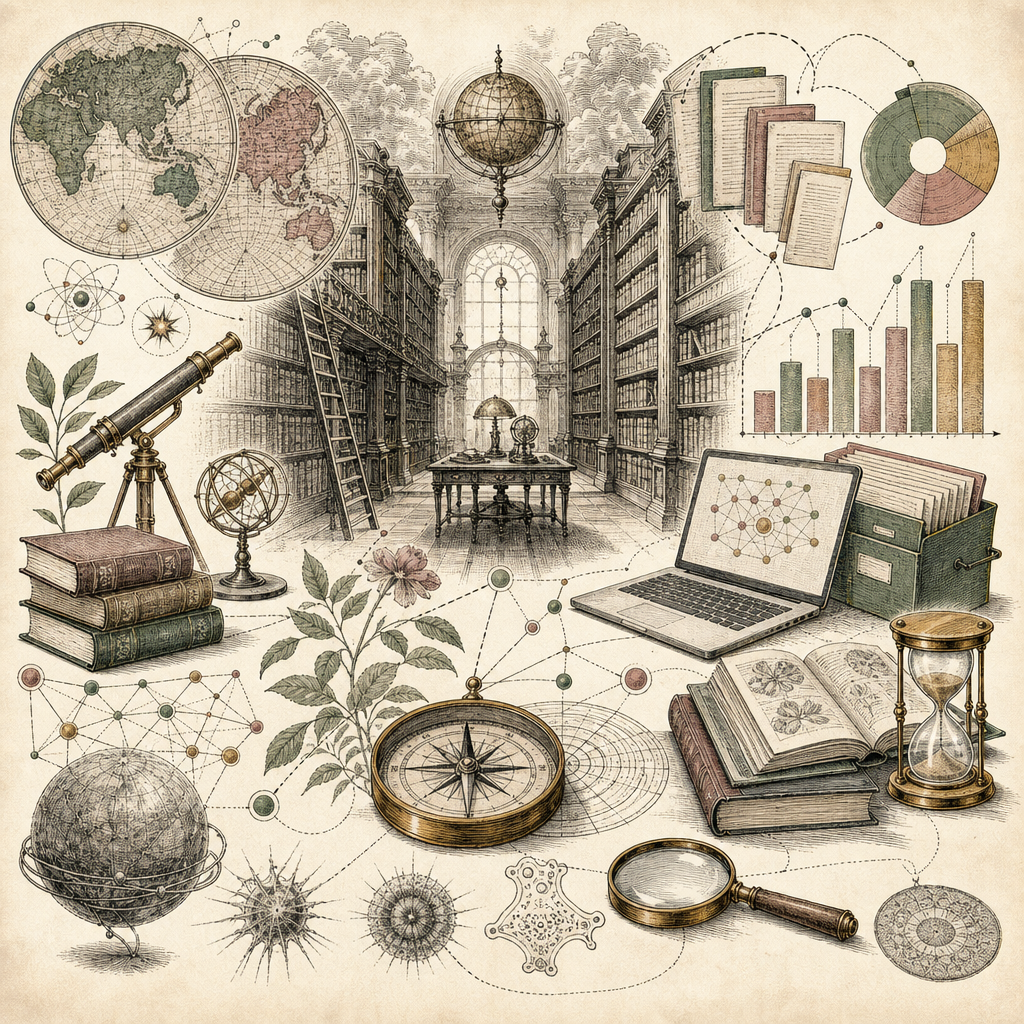
Imagine walking into a library, miles of bookshelves towering like a mini skyline, every book a building holding the promise of knowledge. Yet, without a map or a plan, you find yourself wandering aimlessly, overwhelmed by the sheer volume of information. This is the academic research landscape: vast, dense, and, if approached without strategy, as daunting as attempting to brew your morning coffee without the beans.
Craft Your Research Blueprint
Before diving into the ocean of information, you need a sturdy ship - in other words, a research blueprint. Start by defining your research question. A well-defined question is like the North Star guiding sailors. It directs your focus and prevents you from veering into irrelevant territories. Once you’ve got your question, chart out keywords and related terms that will anchor your search.
Use the Citation Generator to keep track of the myriad sources you’ll encounter. It’s like having a magical note-taker that organizes your references with ease, saving you from the dreaded last-minute citation frenzy.
Dive into Diverse Sources
Think of your research sources like a buffet: variety is the spice of academic life. Don’t just rely on articles from one journal or a single textbook. Explore papers, books, credible websites, and even podcasts or videos. Diverse sources provide richer perspectives and can stand up to scrutiny better than a single viewpoint.
For some external guidance, take a look at Google Scholar for a plethora of academic papers and publications that can add depth to your research.
Absorb and Annotate Like a Pro
Reading isn’t just about skimming - it’s an exercise in active absorption. As you go through the material, make annotations, highlight key points, and jot down questions or thoughts. Consider using Flashcard Maker to create quick review cards that reinforce what you’ve learned. Flashcards are the brain’s secret weapon, turning reading material into a game of intellectual ping-pong.
Sharpen Your Clarity with Optimization
Ever read a sentence three times only to realize it still makes no sense? You’re not alone. Academic writing can sometimes feel like deciphering an ancient script. Enter the Text Readability Optimizer, your trusty decoder ring. This tool helps simplify complex texts, making them more digestible without missing the core message.
Synthesize and Create
Research isn’t just about consuming information; it’s about creating new insights. Synthesizing involves piecing together information from various sources to craft your compelling narrative. Develop a thesis or argument that interweaves the strands of your research into a cohesive tapestry.
Consider using MAPb2 for visual thinking to organize your thoughts or create mind maps. Visual tools help in connecting the dots and seeing the big picture more clearly.
Present with Precision
The grand finale of your research journey is the presentation. Whether it’s a paper, a presentation, or a report, clarity and organization are key. Use tools like PDFb2 to polish your documents, ensuring they are as professional as they are insightful.
Ready to Conquer?
With these strategic tips and a kit of powerful tools, you’re well-equipped to navigate the labyrinth of academic research. Remember, it’s less about how much you read and more about the quality and application of what you learn.
So, embark on your research adventure confidently, and whenever you need a handy tool, b2KIT is just a click away to assist your academic endeavors.